
Back to Blog
The Portion of Your Service Revenue That Disappears After 8 PM
Most dealership service revenue is measured by what gets booked. This article examines the portion that never reaches the schedule at all, and what changes when after-hours calls are handled rather than forwarded to voicemail.
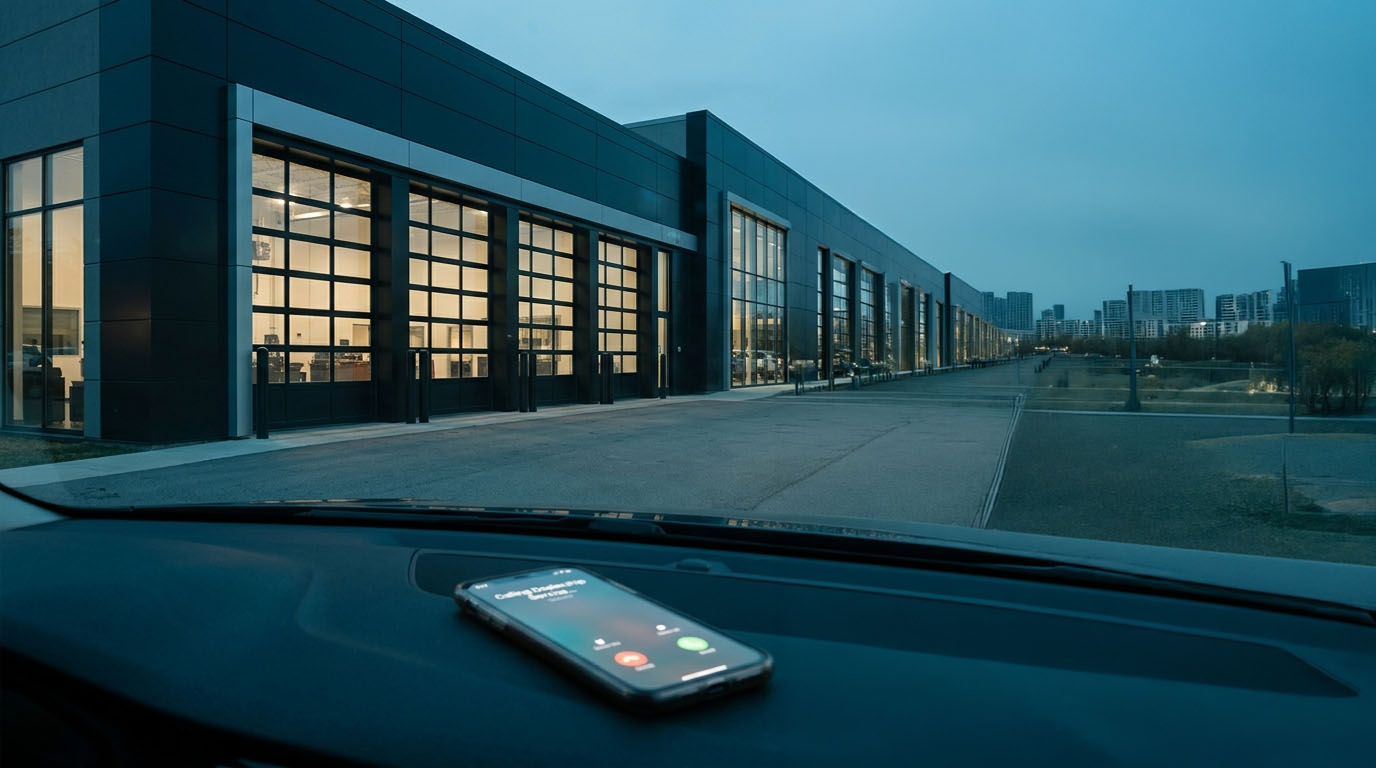
On a Friday evening at 7:20 PM, a customer finishes work, sits down, and decides it is finally time to book that brake inspection that has been sitting on the to-do list for two weeks. The vehicle is a 2022 SUV with a grinding noise that has been present since the start of the month. The customer is motivated, the intent is clear, and the decision to call the dealership rather than a quick-lube shop down the road reflects a reasonable degree of brand loyalty. The service desk closed at 6 PM. The call rings through to voicemail. The customer does not leave a message.
That scenario is not an edge case. It is a routine feature of how automotive service demand behaves, and it represents a structural gap that most dealerships have accepted as simply the cost of operating with finite staff hours. The question worth examining is whether that acceptance is accurate, and what the actual revenue implications are when every call that arrives outside staffed hours is treated as a non-event.
Customers Call When They Have Time, Not When the Service Desk Is Open
The assumption embedded in most fixed ops staffing models is that service demand follows business hours closely enough that the gap between "when customers call" and "when advisors are available" is manageable. In practice, that gap is both larger and more predictable than it might appear. Customers with full-time employment are constrained in when they can make personal calls. Early morning before work, evenings after 6 PM, and weekend hours are the windows when they have the time and mental space to deal with a vehicle service inquiry. These are also the windows when most service desks are either closed entirely or running on reduced capacity.
The result is a pattern where a meaningful share of inbound service call volume concentrates in windows where the likelihood of the call being answered is lowest. This is not a failure of customer awareness; they are calling when it is convenient for them, as any reasonable person would. It is a failure of the infrastructure to meet that demand at the moment it appears.
What Actually Happens When a Service Call Hits Voicemail
The instinct to treat a voicemail as a deferred opportunity rather than a lost one is understandable but largely unsupported by how customers actually behave. When a caller with a genuine service need reaches voicemail, the most common outcome is not that they leave a message and wait for a callback. The most common outcome is that they hang up, often within the first few seconds of the greeting, and either call a competitor or decide the task can wait another week, at which point the urgency has dissipated and the booking may never happen at all.
Research published by Forrester found that customers who initiate a phone call convert 30 percent faster, spend 28 percent more, and have a 28 percent higher retention rate than customers who engage through other channels. That profile describes a high-value customer segment, precisely the type of caller a dealership's service revenue depends on. Sending that caller to voicemail is not a neutral outcome; it is the most likely way to ensure the appointment never gets booked and the relationship with that customer begins to erode.
The conversion math compounds this. A single missed after-hours service call does not represent one repair order. It represents the repair order that was not booked that evening, plus the reduced probability that the same customer returns for the next service interval, plus the probability that a competing shop now has the relationship that the dealership had built over the vehicle's lifetime with them.
The Structural Problem Is Not a Staffing Problem
It is worth being specific about what kind of problem after-hours call coverage actually is, because the framing matters for how it gets solved. Dealerships that have addressed it by extending service desk hours or adding BDC headcount in evening shifts have found that the economics are difficult to sustain. The call volume after 7 PM does not typically justify a full additional headcount position, but it also does not justify ignoring it entirely given the value of each individual call.
This is not a staffing problem in the sense that adding more advisors would fix it. The calls arrive at unpredictable intervals across a wide window, and the volume rarely justifies continuous staffing during those hours at a single-rooftop operation. It is an infrastructure problem, specifically a gap between when inbound service demand arrives and when the tools exist to capture it. Framed that way, the solution is not a scheduling change; it is coverage that operates when the team cannot.
What Changes When After-Hours Calls Are Handled
When every inbound service call is handled regardless of the time it arrives, including those that come in at 7 PM on a Friday or at 8 AM on a Saturday before the service desk is fully staffed, the appointment schedule begins to reflect actual demand rather than demand filtered through availability windows. Appointments that previously never made it onto the schedule, because the customer called after close and did not leave a message, begin appearing in the DMS by the time the service advisor arrives in the morning.
For a dealership using Viova, the specific mechanics are as follows: the call arrives after hours, Viova answers in natural language, identifies the customer's need, accesses the live appointment schedule through direct DMS integration, and books the appointment in real time with all required fields populated. The customer receives a confirmation. The advisor opens their schedule the next morning and the booking is already there, no manual entry required and no reconciliation step between a separate scheduling system and the DMS. The appointment did not require a person to be available at 7:20 PM on a Friday; it required the right infrastructure to be in place.
The Revenue Picture for Dealership Principals
For a dealership principal evaluating the practical financial impact, the relevant question is not whether after-hours calls have value in the abstract. It is how many service calls arrive outside staffed hours in a given month, what portion of those callers do not leave voicemails, and what a repair order is worth on average at that operation. Analysis from Marchex examining more than 8 million dealership calls found that more than 19 percent of calls to dealerships go unanswered or abandoned. The portion that arrives specifically in after-hours windows, and that represents service intent, is a subset of that figure, but it is a subset that has historically had no capture mechanism at most operations.
The variable is not whether those calls represent real revenue. They do. The variable is whether the dealership has built the infrastructure to capture them or whether it is measuring service performance only against the appointments that made it onto the schedule, which is an incomplete picture of actual service demand.
Viova does not change the size of the inbound demand at a dealership. The calls are already arriving. What it changes is the proportion of that demand that converts into a booked appointment rather than a voicemail no one hears until the following business day, by which time the customer has already moved on.
Book a Demo at viova.ai/book-a-demo to see how Viova handles after-hours inbound calls with direct DMS integration.
Share Article
More Articles